Everyone is trying to figure out what happened after last Tuesday’s wipeout of Republicans throughout the nation, which included not only losing the House and Senate but also losing Texas to the blue column. There are two lines of thought that I believe are both wrong and harmful, yet are being promoted and repeated heavily in online conservative spaces.
I addressed the first theory—that losing six seats in the Legislature was the fault of the Idaho GOP—in Saturday’s paid subscriber update. For those who aren’t paid subscribers (you can fix that by the way), I wrote this:
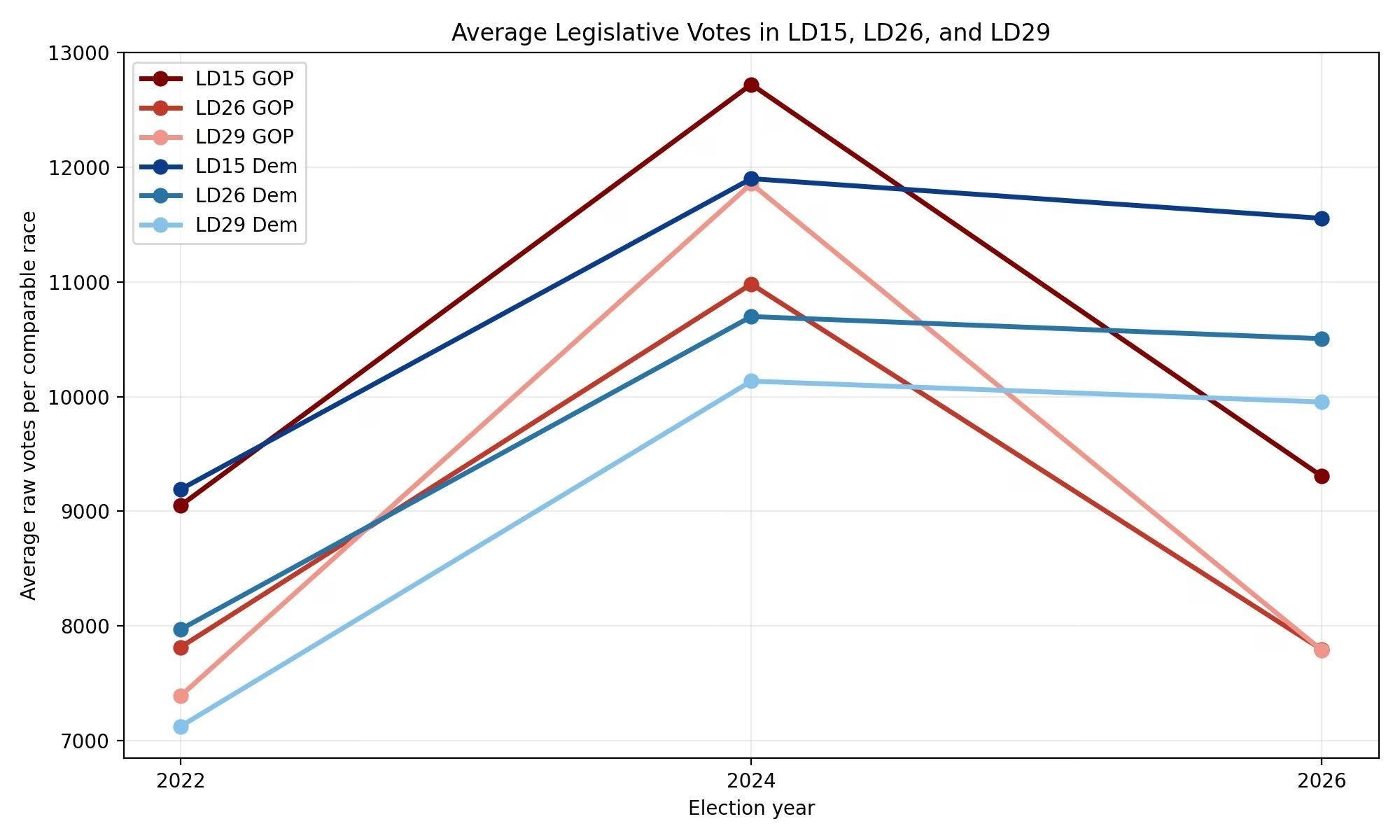
Democrats turned out this year at the same levels as a presidential election, while Republicans turned out like a midterm. In fact, Republican candidates received more votes than in the previous midterm, 2022, but were swamped by the additional Democratic votes. Some of that can be chalked up to crossover voters, while more can probably be pegged on unaffiliated voters who supported President Trump in 2024 but voted Democrat this year. However, I think the largest share of blame comes down to the fact that a lot of Democrats simply came to vote, while a lot of Republicans couldn’t be bothered.
How much extra money would it have taken to change the results in the three swing districts? I’m not sure such a number exists. Remember that Idaho weathered the blue wave better than any other state in the nation, perhaps equal to Florida. We defeated Prop 1, kept the legislative supermajorities, and won every statewide and federal race. Losing six seats in Boise, Pocatello, and Blaine County sucks, but that was basically all we lost.
I went on to share statistical projections I built using AI—what if Republicans had turned out in 2026 like they did in 2024? What if Democrats had turned out at the same rate as Republicans?—and came to the conclusion that no amount of money could have changed the outcome this year. The blue tide lifted Democrats throughout the nation, and in districts 15, 26, and 29, it was enough to oust three Republican incumbents and capture three more open seats.
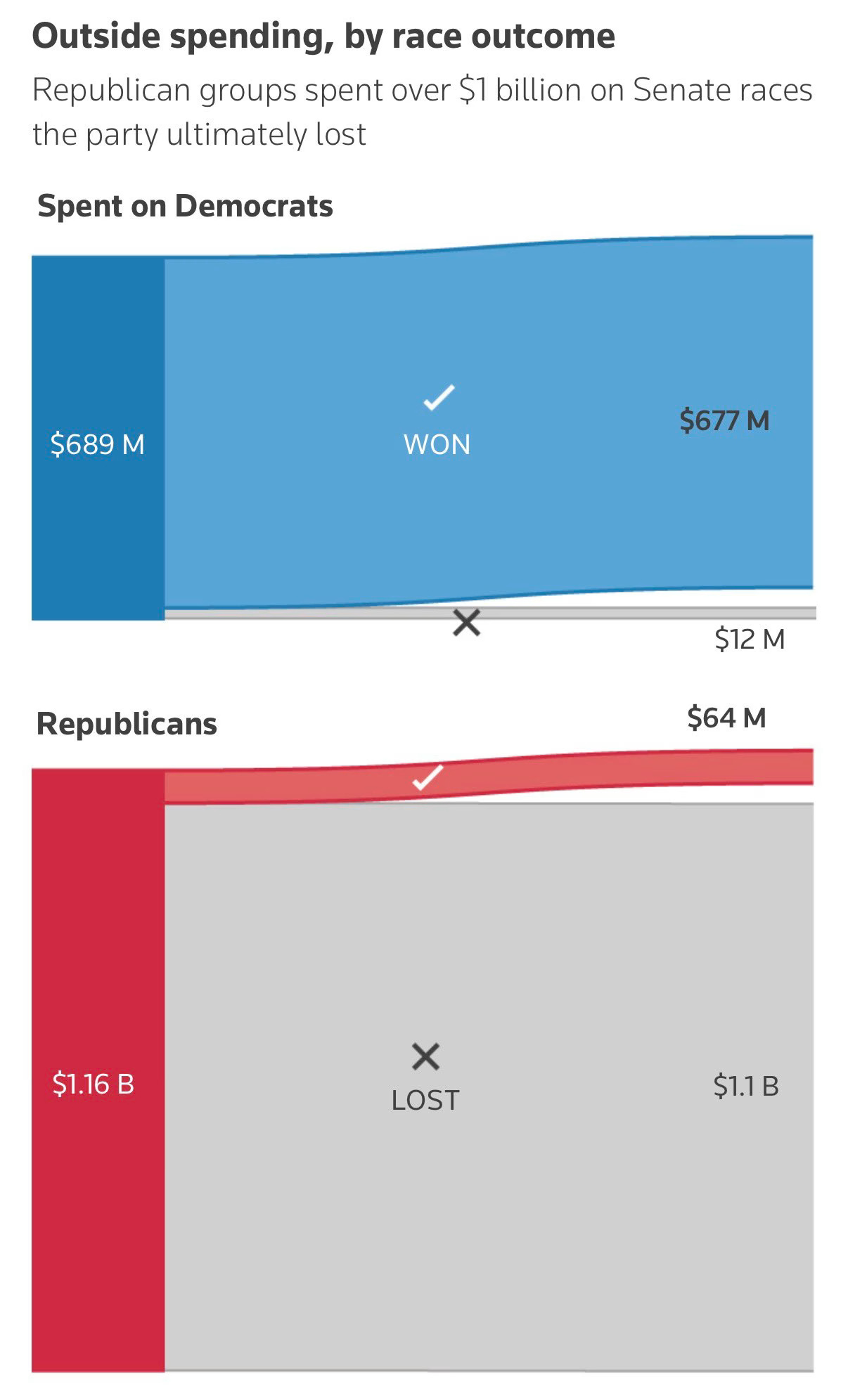
I came across a graph on X yesterday showing how Democrats won across the board despite being outspent nearly 2:1. I haven’t checked the underlying numbers, so take it with a grain of salt, but if it’s true, it shows that money wasn’t the problem this year.
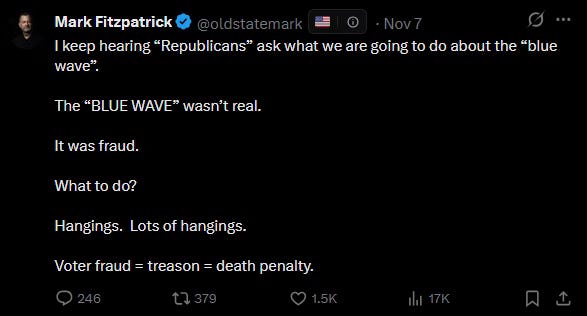
So what happened? Another explanation I’m seeing online is voter fraud. Numerous conservative influencers, both nationally and locally, claim that Tuesday’s numbers are impossible, which means some sort of fraud must have occurred.
I believe that crying fraud after every electoral loss is a grave mistake that prevents us from doing the necessary work of examining why we lost and figuring out how to win next time.
First, why should we assume that our side will win every free and fair election? That completely ignores factors such as national issues, candidate quality, and campaign strength, not to mention 250 years of American history. Partisans on both sides like to believe that we’re just one election away from eternal domination. After George W. Bush won reelection in 2004, House Majority Leader Tom DeLay declared that Republicans had established a “permanent majority,” only for the GOP to lose both the House and Senate two years later. Following Barack Obama’s victory in 2008, Democratic strategist James Carville envisioned 40 years of Democratic rule, but two years later, Republicans took back the House.
There was already a sense of doom and gloom on right-wing social media last Wednesday morning, as if this one loss meant the end of the Republican Party, and of America, for that matter. But as Ryan Spoon wrote last week, the pendulum always swings back.
So was it fraud? Most of the allegations I’m seeing online are some variation on the suggestion that internet-connected vote-counting machines flipped votes, similar to what people like Mike Lindell and Sidney Powell described happening in 2020. Four years ago, I wrote about how the outlandish theories of such people (Lindell promised that the Supreme Court would rule 9-0 that Donald Trump won in 2020, and Powell promised to release a “kraken,” whatever that was meant to be) drowned out real concerns about how mail-in voting during the COVID-19 lockdowns distorted the will of the American people.
Mr. Lindell published his numbers for the alleged vote shifting in the state of Idaho, all the way down to the county level. Lindell’s team said that the vote shift occurred in every single county, with numbers ranging from 4.35% in tiny Clark County to 11.89% in liberal Blaine County. Overall, his numbers showed that 6% of Idaho votes in the presidential election were shifted from Donald Trump to Joe Biden.
Where did Lindell get these numbers? I have no idea. The fact that at least seven of Idaho’s forty-four counties are so small that they have no election machines and count every vote by hand should call them into question. However, many conservatives were motivated by this apparent fraud to act, contacting elections officials throughout the state and demanding audits and recounts.
Secretary of State Lawrence Denney ordered a hand recount in Butte and Camas counties. Whereas Mr. Lindell had accused these two counties of changing 170 votes, the hand recount found only ten errors.
While I believe that Lindell’s heart is in the right place, I suggest that he has been misled by opportunists who took advantage of a wealthy patriot who wanted to find evidence of vote tampering. His “tech guys” told him what he wanted to hear, and he ran with it. The result of his endeavor, rather than helping fix the problems with our election systems, has been instead to tar anyone pursuing election reform as a conspiracy theorist.
The true yeoman’s work of explaining what happened in 2020 fell to journalist Mollie Hemingway, whose book Rigged: How the Media, Big Tech, and the Democrats Seized Our Elections went into great detail about the legislative and judicial environment that allowed Democratic governments to carpet-bomb their states with mail-in ballots, which were then harvested by party activists. The real story from 2020, in my opinion, was how the connection between “voters” and “ballots” was severed, perhaps permanently.
Alleging that fraud was the reason Texas turned blue requires imagining a conspiracy in which Texas Republicans cheated against themselves. After all, going into this election, Republicans controlled the state government and both houses of the Legislature.
I believe Idaho has secure elections. I can’t speak for other counties, but I’ve served as a poll worker and chief judge in Ada County several times. Voters fill out paper ballots, which are then optically scanned by machines that are not connected to the internet. (Yes, I’m sure.) Ballots are deposited in boxes beneath the machines and preserved for future auditing. Ada County also has the Ballot Verifier system, which allows anyone to view scanned images of every ballot cast, including early and absentee ballots.
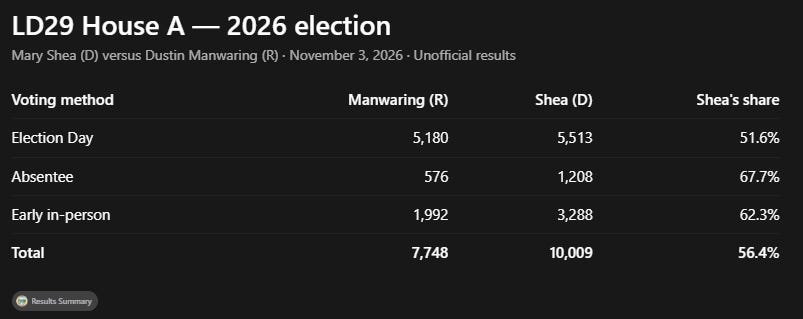
One online activist claimed that it was suspicious for Democratic candidate Mary Shea to have lost twice to Rep. Dustin Manwaring, only to win on her third try. I tried to explain how that happens regularly in politics. My own Rep. Ted Hill lost his first two elections. Sen. Dan Foreman was ousted, lost again, but then came back and won up in District 6. Scott Herndon lost to Sen. Jim Woodward, then beat him, then lost to him, and has now beaten him again.
I took a closer look at the Manwaring/Shea race and found that the Democrat not only dominated early and absentee voting but won on Election Day as well.
To call this a stolen election, one must present a plausible theory of how Pocatello manufactured not only early and absentee ballots but enough Election Day ballots to swing the vote.
Besides, if there’s an all-powerful “they” out there that stole the election, why didn’t they steal Prop 1? Surely legalizing abortion would have been the top priority for “them.”
Does that mean no cheating happened? Of course not. What the Democrats did with ranked-choice voting in Alaska—running a fake candidate with the exact same name as Sen. Daniel Sullivan—is an obvious case of cheating, or at least a dirty trick. The weakest links in any system are human beings, and that’s likely where you would find irregularities if they exist: poll workers registering someone to vote without proper documentation, a parent mailing in an absentee ballot for an adult child off at college, things like that. But that’s not enough to create a wave of the magnitude we saw last week.
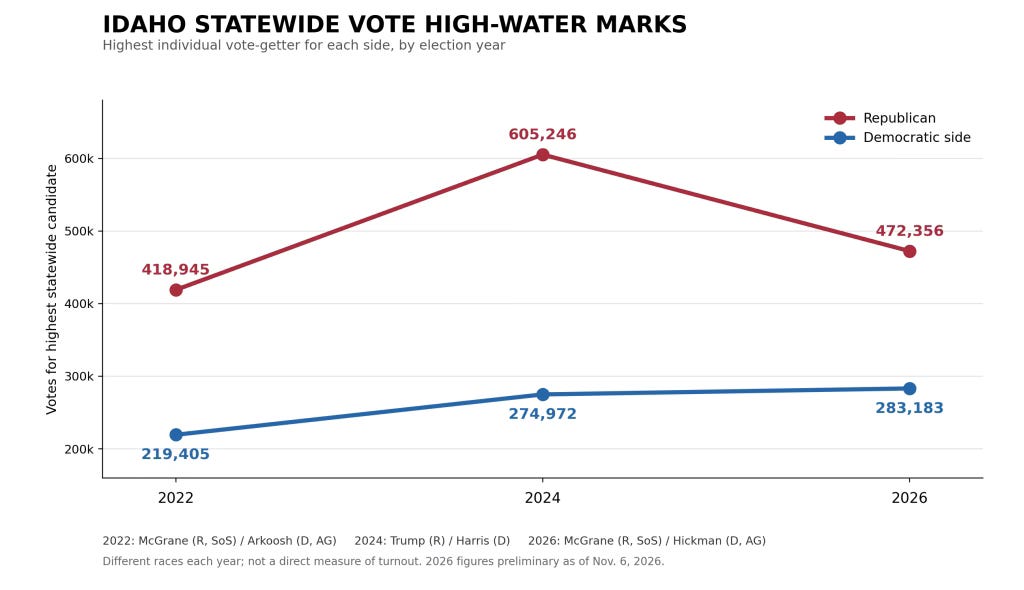
I had ChatGPT build me a graph showing the highest vote totals for individual Democratic and Republican candidates in 2022, 2024, and 2026. Secretary of State Phil McGrane was the top Republican vote-getter in both midterms, while it was President Trump in 2024. On the Democratic side, it was Tom Arkoosh in 2022 and Lori Hickman in 2026—both candidates for attorney general—and Kamala Harris in 2024.
These numbers match what we saw above from districts 15, 26, and 29: Democratic voters turned out like it was a presidential election, while Republicans—though doing better than in the last midterm in 2022—still treated it like a midterm. This is the same pattern that occurred nationwide. Swing districts turned blue, red districts got a little less red, and it was enough for Democrats to do a lot of winning.
Later this week, the Secretary of State’s office will conduct a random drawing to decide which precincts will receive a hand-counted audit of all ballots. I suspect we’ll see the same effect at the precinct level that we saw nationally: a 5%–10% increase in the margin for Democratic candidates across the board from their 2024 numbers.
Creative writing exercises about electoral fraud and voting machines don’t change the fact that Idaho was hit with a double whammy of a nationwide blue wave and Proposition 1, which motivated Democrats to turn out at the same or even higher levels than in 2024. That presidential election shows that blue voters were already there; we just did not expect them to vote at that level.
What does this mean for 2028, both nationally and in Idaho? First, we need to address voters’ concerns. Neoconservative advisors promised America that striking Iran would have “no downside” and would not impact the midterms. That was clearly false. While the conflict itself can barely be called a war—it’s little more than the same air-power strategy used by President Bill Clinton against Iraq and Serbia in the late 1990s—the resulting increase in gasoline prices affected everything else. Young people who faced the prospect of being unable to afford a house or a family, or to find a well-paying job, turned to President Trump in 2024. But he took the political capital he earned and handed it to the same Bush-era advisors who mired us in endless Middle Eastern wars two decades ago.
That was a costly mistake.
Beyond the political issues themselves, left-wing groups have apparently created a 24/7/365 campaign apparatus, using things like the No Kings protests to build robust lists of voters and volunteers that can be mobilized to vote while Republican voters stay home. Republicans need to figure out how to build our own get-out-the-vote effort that doesn’t take midterms off. That means conservatives must learn the lesson that abstaining from elections is not an option.
One more factor I think deserves attention is Charlie Kirk. Both problems I mentioned above—President Trump making a choice that alienated his base, and Republicans not turning out to vote—were things that Charlie had already figured out. He was an important link in communications between the people and the president, and he spent his final summer on earth warning that a prolonged conflict in Iran was a bad idea. He also built an incredible turnout machine, along with Cliff Maloney of Citizens Alliance, that matched or even exceeded what the Democrats achieved.
The show goes on, and the left figured out how to adapt. That means we must adapt as well, without Charlie Kirk. I suggest you follow and support men like Cliff Maloney, who knows how to build a winning political machine, as well as Matt Edwards of Citizens Alliance of Idaho, who is building a conservative coalition here in the Gem State. (I’ve been a paid contributing editor to CAI’s Idaho Signal program for the last few sessions, but they didn’t pay me to say this.)
The American right, especially those of us in Idaho, should avoid the temptation to fall back on easy explanations that don’t require us to do the hard work of winning elections. Rather than blaming others or claiming that “they” cheated, we must look inside our organizations, our elected officials, and especially ourselves to figure out how to change course. The pendulum can swing back, but only if we’re willing to put in the work to move it.
Feature image created with ChatGPT. AI still struggles with chessboards!
Thanks for reading Gem State Chronicle! This post is public so feel free to share it.
Note: After I published this, word came down about a misplaced thumb drive in Latah County that could hold around 2,000 previously-uncounted votes. They’ll do a full recount tomorrow. This is a reminder that errors can happen, and are not necessarily deliberate fraud. The Latah County Clerk is a Republican, and Democrats including state chair Lauren Necochea are insinuating malice.
Nick Freitas spoke to Cliff Maloney of Citizens Alliance last week about what Republicans need to do next. They’re both excited about what’s going on in the Gem State, especially with Matt Edwards and Citizens Alliance of Idaho:
Gem State Chronicle is a reader-supported publication. To receive new posts and support my work, consider becoming a free or paid subscriber.
There’s no slowing down here at the Gem State Chronicle. The election might be over, but the legislative session is just around the corner, and I’ve got several exciting new pieces in the works. Stay tuned, and tell your friends to subscribe!
As always, thank you to sponsors Lynn Bradescu’s Boise Realty, Money Metals, and New Saint Andrews College. Do you want to see more independent journalism and level-headed political analysis in Idaho? Consider supporting the Gem State Chronicle with a paid subscription! Thank you again to all those who have given of themselves to support me and my work. I am humbled and grateful!