

Boise State University (BSU) will soon face one of the most important leadership decisions in its history. Since former president Marlene Tromp departed in 2024, Idaho’s largest public university has been led by interim president Jeremiah Shinn. The Idaho State Board of Education (SBOE) has struggled to produce a permanent replacement through the traditional search process, though Gov. Brad Little recently signed a law that should make that process easier.
For Idahoans—residents of a conservative red state that takes for granted the traditional values of faith, family, and freedom that once defined our nation—the question of who will lead the state’s largest public university is imperative. Over the past few decades, higher education in America has embraced an explicitly left-wing worldview, one that assumes tenets of Marxism, progressivism, and social justice. The culture has shifted, however, with state legislatures throughout the nation rejecting the idea of forcing incoming students and staff to adopt ideologies such as critical theory and diversity, equity, and inclusion (DEI).
Senate Bill 1198, passed at the end of the 2025 legislative session, prohibited forced DEI in public colleges and universities. The SBOE had previously taken steps to curtail DEI as well. However, the Idaho Freedom Foundation, along with the Goldwater Institute out of Arizona, filed a complaint alleging that Idaho’s public universities—including BSU—were violating the new law.
Just one example cited in the complaint is that BSU still requires students pursuing a bachelor’s degree in social work to take classes built on the premise of privilege, implicit bias, and systemic oppression.
S1198 was passed after a jury found BSU administrators liable for violating the civil rights of Big City Coffee owner Sarah Fendley, after they broke a contract and chased her off campus to satisfy anti-police radicals among the BSU student population.
As you can see, the task of the Presidential Search Committee is enormous. It must find a candidate who is willing and competent, and who reflects Idaho values. That is not an easy job. It must also nominate a candidate who can maintain continuity with the past while breaking with the former administration’s emphasis on DEI and other left-wing dogmas.
Rumors are flying that the interim president, Jeremiah Shinn—who until recently sat on the search committee—is considering throwing his own hat into the ring. He has made several moves during his short tenure that suggest he plans to be here for the long haul, including the decision to pay $450,000 to the University of Idaho for a nonconference football game in 2031 as well as consolidating two of BSU’s colleges and closing a third.
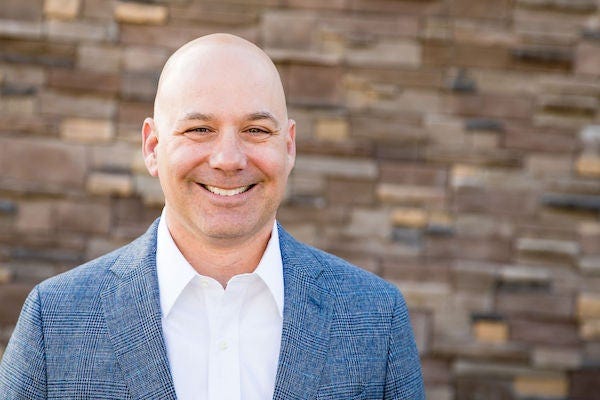
On Monday morning, BSU announced a restructuring of the search committee following the passage of Senate Bill 1225, noting that Shinn would no longer be part of it going forward:
Because the timeline has extended beyond what was originally anticipated, Interim President Dr. Jeremiah Shinn will no longer serve on the search committee. When the search began, it was not expected that he would be carrying full presidential responsibilities for this duration while also participating in the search process. The Board extends its sincere gratitude to Interim President Shinn for his continued leadership and service to Boise State.
If the rumors are true and Shinn is planning to apply for the job of full-time president, it would pose a conundrum for the search committee and the SBOE. Beyond the impropriety of someone spending a year on the committee suddenly deciding to apply for the job himself, Shinn would represent a return to the old days of DEI and discrimination from which BSU is trying to move on.
According to OpenSecrets and FEC filings, Shinn is a regular donor to the Democratic Party and Democratic candidates, including Joe Biden. His most recent donations came in 2025, after he was appointed interim president. Yet that is just the beginning.
In 2022, Shinn coauthored an article explicitly advocating for social justice activism in higher education, titled “Social Justice in Student Affairs Graduate Programs: Exploring the Perspectives of Senior Student Affairs Officers.” In the article, Shinn and his coauthors comment approvingly that “social justice has become a fixture in professional preparation programs and student affairs broadly.” To help facilitate this trend, Shinn recommended that “graduate programs should require coursework and other program elements… that further [social justice and inclusion] foundational competencies around individual identities, privilege, power, diversity, inclusion, equity, and systemic oppression.”
In addition to specific coursework dedicated to the subject, Shinn argued that social justice and inclusion content “should be integrated throughout the entire curriculum.” For example, he encouraged graduate coursework to include assignments “where students analyze how racism has shaped higher education historically, how it manifests presently on campus and in functional areas, and how they have benefited from or been oppressed by race.”
In 2019, Shinn was a co-presenter in a conference series titled “Reimagining Service and Activism as Higher Education Program Outcomes.” Shinn’s presentation, “The False Binary of Administrator vs. Activist: SSAO [Senior Student Affairs Officers] Perspectives on Social Justice in Graduate Preparation Programs,” sought to “reimagine higher education” by “cultivating graduate students as activists” while also “teaching them to be administrators.”
Shinn himself has worked to blend social justice activism with school administration throughout his career in higher education. During his tenure as vice president of student affairs at LSU, Shinn served on the university’s DEI steering committee tasked with developing a “roadmap” for “enhancing diversity…as a core institutional value.” Among the recommendations were establishing additional minors in “Latinx Studies, Multi/Ethnic Studies, and related fields,” implementing a “diversity and inclusion core requirement for all degrees,” and strengthening affirmative action policies that prioritized hiring and retaining “diverse” faculty and staff.
As vice president of student affairs, Shinn also oversaw LSU’s bias reporting system. A legal memorandum issued by the Southeastern Legal Foundation to Shinn prior to his departure highlighted how the bias reporting system administered by his office wielded “unbridled discretion to assess the viewpoint and content of speech to determine if it is biased,” creating an unconstitutional “chilling effect on [the speech of] all students, particularly those wishing to share conservative views.” This is exactly why the Idaho Legislature passed S1198 last year.
Upon returning to BSU as vice president of student affairs in 2023, Shinn indirectly oversaw two of the university’s DEI bureaucracies, the Student Equity Center and Gender Equity Center. The Student Equity Center provided programming for “historically marginalized groups” with a focus on raising awareness about “oppression” and “institutional or systemic racism” and the relationship of these issues to group identity. The Gender Equity Center provided “trans-friendly” and LGBTQIA+ resources, encouraging students to engage in advocacy for the LGBTQIA+ cause. BSU proactively closed the centers on November 29, 2024, in advance of the SBOE’s impending decision to prohibit them just a few weeks later. In an email announcing their closure alongside other student affairs staff, Shinn signed onto a statement praising their work for providing “key development opportunities to our staff, faculty, and extended community.”
As interim president of BSU, Shinn has sought to protect the last vestiges of the university’s DEI regime. On January 12, 2026—the same day that Gov. Little gave his State of the State Address—the Legislative Services Office (LSO) of the Idaho Legislature issued a report detailing the degree to which the state’s public colleges and universities were in compliance with S1198. The LSO audit found that “the Institute for Inclusive and Transformative Scholarship and related Office of Community Engagement and Belonging” likely violated the law’s “prohibition of the establishment and support of a DEI office or department and contracting or hiring a DEI officer or consultant.”
BSU recently renamed the Institute for STEM & Diversity Initiatives to the Institute for Transformative Scholarship (IFIT). Its stated mission is to “create and nurture a vibrant inclusive community where all are actively engaged in the scholarly life of the university and the region.” Though the scope of the institute’s work has been recently scrubbed from its webpage, archived documents indicate that one of its primary goals is “acting as a change agent” and increasing “representation and success for those who have been historically marginalized and minoritized in their discipline.”
IFIT is overseen by the Office of Community Engagement and Belonging. The office is headed by Lisa Phillips, who was hired as one of BSU’s chief diversity officers in 2023 by former president Marlene Tromp. According to a press release announcing the hire, Phillips’ role was created “to support an inclusive and welcoming environment for all students, staff, and faculty.” Among her key qualifications for the role was her academic interest “in understanding organizational culture, especially how it is perceived and experienced by women of color and other historically underrepresented groups.” Prior to the office’s recent reorganization, Phillips also oversaw the Boise State Uniting for Inclusion and Leadership Development (BUILD) program, which was tasked with developing and implementing DEI-related workshops and trainings for university faculty and staff.
The office’s continued emphasis on DEI is further evidenced by its junior staff. Jeremy Harper, an employee development specialist, was allegedly organizing protests against Big City Coffee as early as 2016. He received an MA in Gender and Cultural Studies with an emphasis on “educational inequity, social movements, gendered violence, and research ethics.” As a former director of the BUILD program, he “facilitated workshops on inclusive teaching practices, inclusive leadership, LGBTQIA+ identities, [and] multiracial identities.”
With Shinn’s approval, Lisa Phillips has continued to push DEI-related initiatives as BSU’s tribal liaison. The office’s website prominently displays a “land acknowledgement,” declaring that “Boise State University was established upon the ancestral homelands of the Original Boise Valley People – the Newe (Shoshone), Numu (Paiute), and the Panakwate (Bannock) People.” To support the land acknowledgement, the office developed an accompanying library guide that links to the misleadingly named “U.S. Department of Arts and Culture,” a left-wing organization dedicated to advancing “collective liberation.” According to that resource, land acknowledgements are designed to “counter the doctrine of discovery,” “remind people that colonization is an ongoing process,” and serve as a “necessary step toward… enacting the much larger project of decolonization.” Another resource linked in the library guide says that “part of the point in making land acknowledgements is to recognize how systemic and institutional systems of power have oppressed Indigenous peoples.” Notably, S1198’s definition of DEI includes “settler colonialism,” making the promotion of these concepts by the Office of Community Engagement and Belonging potentially unlawful.
It seems fairly clear that a Jeremiah Shinn–led BSU would continue promoting DEI and other left-wing ideologies, both via any loopholes in the law they could find and by potentially defying the will of the Legislature and the people of Idaho. It would be a step back to the days of Marlene Tromp, when radical activists ruled the roost.
The Idaho State Board of Education has an opportunity to take a step forward toward timeless education based on values such as truth, openness, and sober deliberation of difficult ideas, and away from the DEI hysteria that has gripped this nation for three decades or more. I don’t think anyone is expecting a conservative firebrand to run BSU, but in order to restore trust with the Legislature and the people of Idaho, it must find a candidate who understands the difference between administration and advocacy.
Almost exactly one year ago, I wrote about the vacancy at BSU and invited readers to respectfully contact the SBOE and request that they hire a president who reflects the timeless values of Idaho and of America. I believe this is a good time to do so again, if you are so inclined. BSU is a beacon atop Idaho, the city on a hill that our state and the world look to for inspiration. Where BSU goes, the culture of our state follows. Let’s make sure it is in good hands.
Feature image courtesy of Boise State University.
I was horrified when I moved to Idaho 6 years ago and realized that Marlene Tromp was president of BSU. I lived in the Santa Cruz area for 14 years and can attest that it makes the rest of California look moderate by comparison. I couldn’t for the life of me understand how, in a conservative state like Idaho, BSU could choose her. I pray that wealthy, conservative donors can put enough pressure on the selection committee to ensure that we don’t get someone else like her as the new president.
Finding a new BSU president suitable for and aligned with Idaho values is critical. However, without strong support including additional prescriptive legislation, the new president would be thwarted at every turn by the entrenched woke DEI fortress that is the BSU academic and administrative staff. Never underestimate the ability of professional Democrat deadwood to stymy reforms not to their liking. They're called "we bes" for a reason: We be here when you get here. We be here when you leave.
Nor would it be enough to empower the new president to fire entrenched centers of resistance at BSU. The legislature needs to join with the new president in reforming BSU. A few ideas would be to abolish tenure and require academic staff to focus on teaching. Another would be to set a target for reducing total administrative staff by, say, 20%. Padding administration headcount is a time-worn strategy. Others who have studied the matter no doubt have even better ideas. And, by the way, the same fundamental reforms should be applied at U of I, ISU, and all other state institutions. Asking a new president on their own to correct BSU's flaws is a near-hopeless mission.