

I wrote last week about how, contrary to the wild claims that appear on social media after every election, Idaho has a strong and robust system of elections. In that piece, I said that hand counting every ballot was neither feasible nor desirable—not only would it add many hours or even days to the time it takes to tabulate votes from each polling place, but it could also introduce more errors than a properly calibrated optical scanner.
Some commenters on social media continued to insist that a full hand count was the only way to have confidence that our elections were not tampered with.
My previous article involved a lot of speculation, but today we have an actual case study in what hand counting multiple precincts’ worth of ballots looks like in the wild. The Board of Canvassers—Secretary of State Phil McGrane, Treasurer Julie Ellsworth, and Controller Brandon Woolf—met Tuesday afternoon to review the results of a hand-count audit of eight randomly chosen counties and officially certify the results of the November election.

One of the counties selected for this month’s audit was Benewah County, which is one of only three in Idaho that conducts a full hand count of every ballot. I asked the Secretary of State’s office how long it took to hand count the approximately 2,100 ballots in the selected precincts in each county and was told it took six or seven hours. And that’s just for a single race, with a five-person team working to ensure accuracy and integrity. Imagine how long it would take to hand count potentially dozens of races in each precinct. It was no wonder that Benewah was the final county to finish reporting data to the Secretary of State’s office this year.
According to the audit report, Benewah County uses a differently colored paper ballot for each contest type, with up to five sheets per voter this year. This caused some issues when it came time to count, because some absentee voters had not returned all their pages, which created discrepancies in the final ballot total. Once the polls close, the same poll workers who just finished a 13–14-hour shift at the polling place are responsible for manually counting ballots in each race. Some precincts divided sheets into piles and counted them that way, rather than verbally calling out votes, as is the practice of the audit teams. The report also said Benewah uses a custom tally book rather than those provided by the Secretary of State.
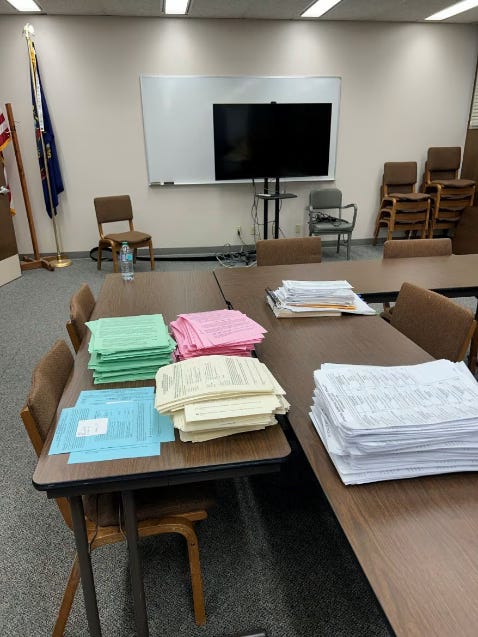
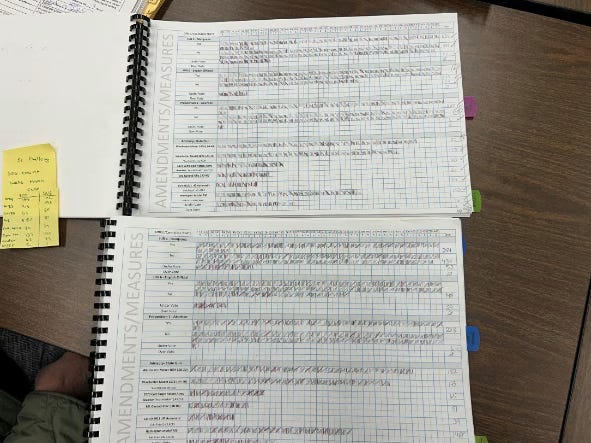
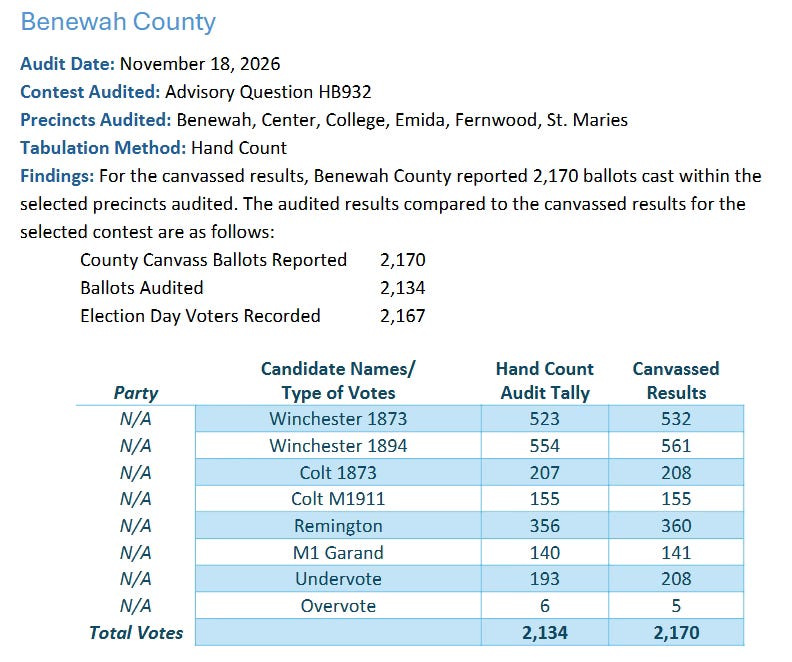
The six precincts in Benewah County chosen for the audit reported 2,170 total ballots, but the audit team could only find 2,134. The St. Maries precinct alone reported 31 more ballots than were tallied by the audit team, representing more than 4% of the 740 ballots cast in that precinct. The team determined that 11 of those 31 were probably undervotes—ballot pages that were not returned by absentee voters—but was unable to account for the remaining 20. There were several discrepancies in the total count for each option, including some in double digits.
The Secretary of State’s office recommended using a single consolidated ballot rather than multiple separate pages and urged the county to consider investing in tabulation equipment.
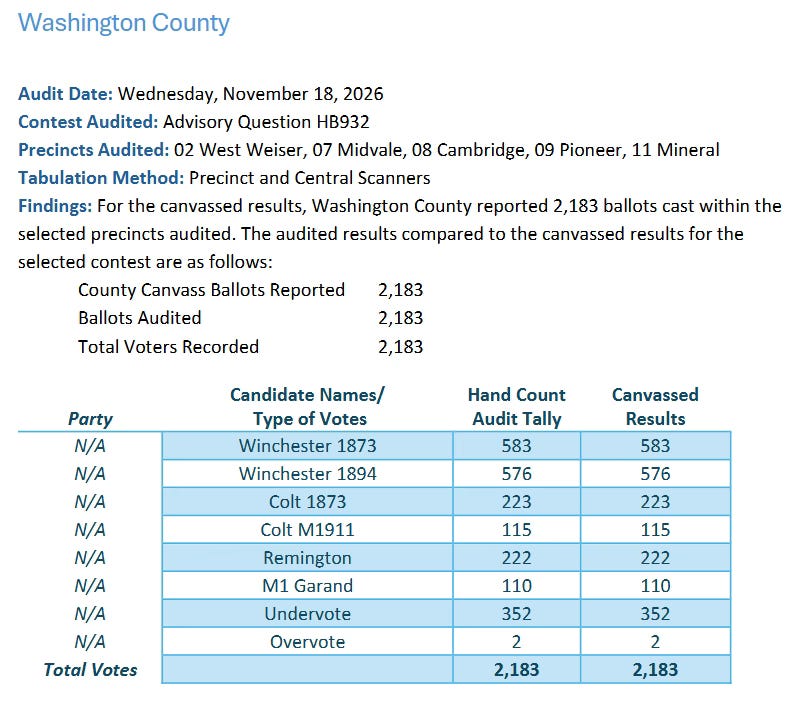
We actually have a terrific apples-to-apples comparison this year. Washington County has a very similar profile to Benewah County—its population is 11,674 compared to Benewah’s 10,530, it has 6,361 registered voters compared to Benewah’s 6,179, and it canvassed 4,173 ballots this election compared to Benewah’s 4,448. The biggest difference? Washington County uses optical scanners to count ballots. That means the audits of precincts in these two counties present a nearly perfect case study comparing the accuracy of tabulation machines to that of a hand count.
The hand-count audits in both Benewah and Washington counties reviewed the state gun advisory question, which makes the comparison even better. The five precincts chosen for the Washington County audit reported 2,183 ballots on Election Day, and the audit team was able to account for every single one. The audit also confirmed the precise counts for each option under the advisory question. In short, the optical scanners performed perfectly in this case.
That’s not to say scanners are perfect. In Adams County, auditors counting the race for attorney general found eleven ballots that were counted as undervotes by the scanner because voters marked the party designator instead of the oval. The auditors were able to clearly interpret voter intent, but the machine didn’t know what to do with it. The mistake was bipartisan—seven of the eleven voted for Raúl Labrador, while four voted for Lori Hickman. Labrador won Adams County 1,552–599, so these eleven ballots did not affect the outcome of the race in the slightest.
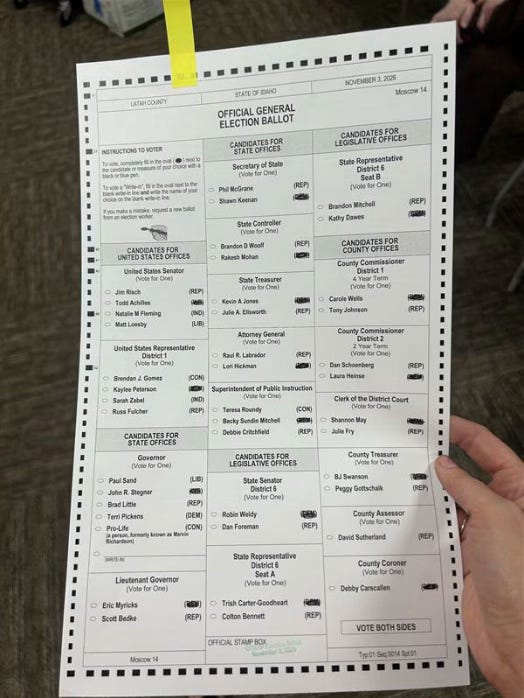
It’s not my intention to go after Benewah County elections staff or poll workers—I don’t envy having to stay up late counting ballots after a 14-hour shift working the polls! Rather, this audit report reinforces the idea that the most likely problem in any voting system is human error, whether on the part of poll workers, hand counters, tabulators, or the voters themselves. Election systems have evolved over the years to minimize the potential for human error—as well as deliberate fraud—as much as possible.
By 1899, just nine years after statehood, Idaho had adopted the Australian ballot, which is what we still use today. Earlier ballots were preprinted by political parties and distributed to voters to deposit at the polling place. The Australian ballot lists every race and allows voters to make a secret choice in each race.
In the late 19th century, Herman Hollerith developed an electromechanical tabulating machine that used punch cards to process data for the 1890 census. However, the technology was not initially used to count ballots. In 1892, Lockport, New York, became the first American city to use a mechanical voting machine, which recorded votes using internal counters. It was not until the 1960s, however, that the Votomatic punch card voting system began spreading across the country.
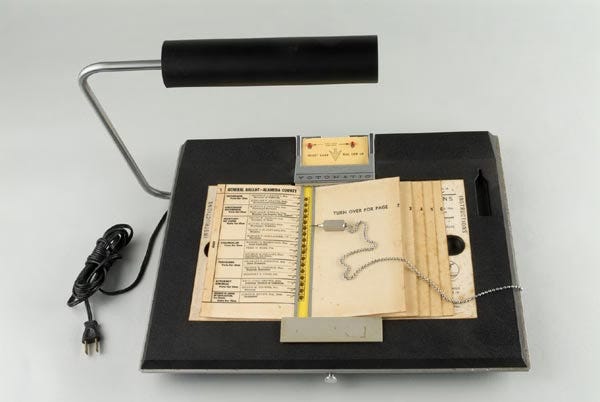

States and counties throughout America were looking for ways to streamline the process, especially as our national population was exploding. Some 14 million voters participated in the election of 1900, in which William McKinley defeated William Jennings Bryan. By 1952, more than 61 million people took part in the presidential contest between Dwight Eisenhower and Adlai Stevenson. By the time George W. Bush defeated Al Gore by a few hundred votes in Florida in 2000, more than 105 million Americans had cast their ballots in that presidential election.
Idaho has 44 counties, which means 44 separate election systems. Some counties adopted punch card machines early on, while others—especially sparsely populated rural counties—continued to count by hand. Other counties began adopting optical scanners as the technology became available. Legislation in 1970 established guidelines for how counties should use tabulation machines. By the year 2000, 14 Idaho counties used punch cards, 14 used optical scanners, and 16 still counted by hand.
Of course, the presidential election of 2000 brought attention to the potential problems with punch cards, as pundits across the country debated the dimpled chads, pregnant chads, and hanging chads in Florida while the White House hung in the balance. The Help America Vote Act (HAVA) of 2002 was meant to help states replace punch card systems with more reliable optical scanners. By 2014, every Idaho county that used machines had retired its punch card systems and switched to optical scanners.
A 2020 story details how Idaho County Clerk Kathy Ackerman made the decision to switch to machine counts. With thousands of voters choosing to cast their ballots by mail during the COVID-19 lockdown, it would have taken days and days to count them by hand, whereas an optical scanner could handle the job in one night.
Following concerns about election integrity stemming from the 2020 election, the Legislature passed Senate Bill 1274 in 2022, requiring the post-election audits that resulted in Tuesday’s report. House Bill 1 the following year clarified that the audits must include hand counts of selected precincts.
The biggest concern I’ve seen in the wild is the fear that tabulation machines are vulnerable to hacking or manipulation. Idaho’s rules say that tabulation machines should not be connected to the internet at any time, and I trust that is the case. As a chief judge in Ada County, I had the responsibility of returning our scanners, along with sealed boxes of paper ballots, to the elections office in Boise. At no time was the scanner connected to the internet, and at no time did I or any of the other poll workers have access to the USB flash drive locked inside the machine.
This system of physically transporting ballots and election data is also susceptible to human error, as we saw twice this year. Up in Latah County, a USB drive containing tabulated votes was overlooked when transferring data to the Secretary of State’s count, a necessary step since tabulation machines are not directly connected. In Bannock County, a box of ballots was overlooked when unloading at the elections office.
These are the sorts of errors that can actually increase faith in the system because, once discovered, it’s simple to figure out why they happened and how to avoid them next time. It’s not like thousands of votes for one candidate appearing in the middle of the night or anything like that.
The ultimate question is this: What do we want from our election system? We want accurate results that truthfully represent the will of the citizens who choose to participate, and we want those results fast. A state like California, which not only takes weeks to finish counting votes but also has very liberal policies regarding voting by mail, fails on both counts—results are neither timely nor trustworthy. I believe that Idaho, despite having 44 separate systems, succeeds on both counts. We know the results of nearly every contest before going to bed on Election Day, with a handful coming in by the next morning, and we can trust that the results are accurate. The Secretary of State’s audit gives us further confidence in that accuracy.
Ultimately, I believe we have the best of both worlds. Optical scanners, when operated transparently and properly calibrated, can accurately count votes across dozens of races in very short order. The audit process involves hand counting ballots from randomly selected precincts to verify the accuracy of the machine counts. Most issues that come up today are the result of human error. At this point, reforming our system means tackling the margins, such as doing away with affidavits for voters without ID, tightening up no-excuse absentee voting, and continuing to ensure that only American citizens are registered to vote.
Machines aren’t perfect, but neither is hand counting. The path forward should be to prudently embrace technological options that allow us to achieve fast and accurate results, avoiding both an unthinking reliance on machines and a neo-Ludditism that rejects anything technological.
Press releases
Gov. Little grants state employees additional day off for Thanksgiving
Gov. Little continues offering eight weeks of parental leave for state employees
Video of the day
Biographer Walter Isaacson spoke with Oculus and Anduril founder Palmer Luckey about life as a young conservative go-getter in Silicon Valley:
As always, thank you to sponsors Lynn Bradescu’s Boise Realty, Money Metals, and New Saint Andrews College. Do you want to see more independent journalism and level-headed political analysis in Idaho? Consider supporting the Gem State Chronicle with a paid subscription. If you have a local business and are interested in sponsoring this platform, reach out to me. Thank you again to all those who have given of themselves to support me and my work. I am humbled and grateful!
I’m continuing to work on several exciting new projects, and hope to have a preview for you very soon. In the meantime, click here to compare how legislators voted during the 2026 session!